


Cradle of Empires: 3 in a Row
4.69.65K Reviews
App Specs
- Version
- 9.4.0
- Updated On
- License
- Free
- Downloads
- 5,000,000+
- Developer
- Awem Games Limited
- Categories
- Puzzle
- Platform
- Android
Screenshots



 Analysis by AppCompare
I tend to enjoy puzzle games more when each board gives me a reason to care about the next one, and Cradle of Empires: 3 in a Row has that extra thread: restoring an ancient city as I work through match-three challenges. It is a free puzzle game from Awem Games Limited, built around Nimiru’s effort to bring a ruined Egyptian setting back to life. That combination makes it a better fit for players who like a light sense of progress between boards than for anyone looking only for a quick, story-free tile match.
What the current version offers
The game is currently at version 9.1.5, and its long run since its January 13, 2016 release gives it the feel of an established mobile title rather than a new experiment. It has a 4.5 average from around 256,000 ratings, with over 5 million installs. Those figures suggest a sizable audience, though they do not tell me whether its particular mix of puzzles and city restoration will suit you; that depends more on how much you enjoy having goals beyond clearing a board.
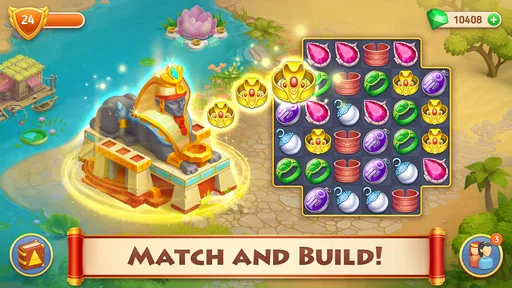
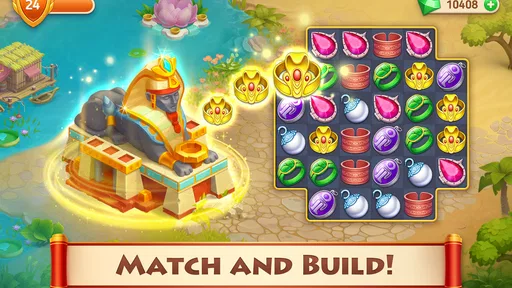
At its core, I match tiles to meet level objectives, earn resources, and use that progress to restore parts of the city. The loop is easy to understand, but the added tasks give a level some context: I am not just chasing a score, I am trying to move a longer restoration forward. The appeal is in that small handoff between puzzle and setting, especially when I want a casual game that offers a reason to return without asking me to follow a complicated story closely.
How the puzzle-and-restoration loop feels
The match-three format will be familiar if you have played other mobile puzzle games. The difference is the surrounding structure. Quests and city-building give the boards a place in a broader sequence, while changing objectives mean that simply making the biggest-looking match is not always the most useful move. I find it helps to pause for a moment and check what the level is asking me to collect or clear before I start swapping tiles. That simple habit can make limited moves feel less wasteful.
Boosters and power-ups add another layer, but I would treat them as tools for a tricky objective rather than something to spend automatically. If a board is focused on collecting a particular resource, a move that opens access to that target may be more valuable than a flashy match elsewhere. Thinking in terms of the objective is a practical way to get more out of the puzzle without turning a relaxed session into serious homework.
The city gives those wins a visible purpose. As resources accumulate, I can restore structures and watch the setting change along with my progress. That is a satisfying payoff for players who like a gradual sense of completion. It also means the game’s rhythm is not purely level-to-level: puzzle progress feeds into a larger rebuilding goal, so a short session can feel worthwhile even when I only have time to finish a board or advance one task.
What has changed, and what that means for players
The current version number shows that this is a game that has continued through multiple releases since launch. I would take that as evidence of ongoing product history, not as a promise that any particular feature, event, or change is new. For someone returning after a break, the sensible approach is to open the game and see what is available in the current build rather than assume that every past event or social activity is still running in the same way.
Worth Reading Before You Choose

EA SPORTS FC Mobile 26 Is a Bigger Football Game, but It Takes Time

Flipboard Shows What News Apps Must Do Beyond the Feed

Switching to Android Auto Means Rethinking Your Driving Routine

Google Calendar Makes a Crowded Week Easier to Manage

Ludo King Makes the Most of the Minutes Between Plans

Baby Panda World Brings Quick Play to Modern Phones, but Its Game Library Feels Busy
For existing players, the basic appeal remains clear from the current setup: match-three levels support quests, resources, and the restoration of an ancient city. If you already enjoy that loop, the version number alone is not a reason to expect a different kind of game. Newcomers can start with the same useful question: do I want my puzzle sessions tied to a longer progression path, or would I rather play isolated boards with no city and quest layer?
Who it suits, and where it can frustrate
I would recommend it to someone who likes approachable puzzles, a visual reward for progress, and a gentle narrative frame. It works especially well for brief breaks: I can play a level while waiting for a meal or winding down, then leave the larger restoration for another session. The Everyone age rating also makes it broadly suitable from a content perspective, though younger players may still need an adult’s help understanding purchases and deciding whether to spend.
It is less suitable if you want a pure logic puzzle, a highly competitive experience, or a game that never nudges you toward optional spending. In-app purchases range from $0.49 to $154.99 per item, so the free entry point does not mean every possible purchase is small. I would begin without buying anything and see whether the ordinary pace feels comfortable. If you prefer a puzzle game with no progression economy or city-building layer, a straightforward match-three alternative may be a better fit.
A Journey Through Ancient Civilizations
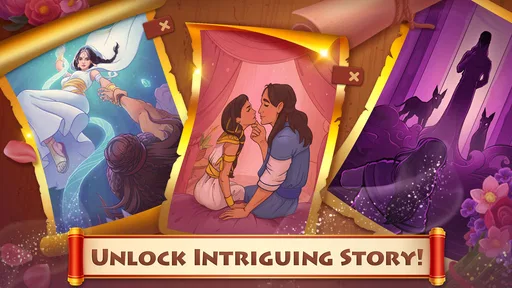
First things first, what really hooked me was the game’s storyline. You’re not just matching gems here; you’re diving into an ancient world filled with mysteries and quests. The game sets you up in a long-lost empire, and your task is to rebuild it from ruins. The narrative is engaging, and the characters you meet along the way add a nice touch of depth.
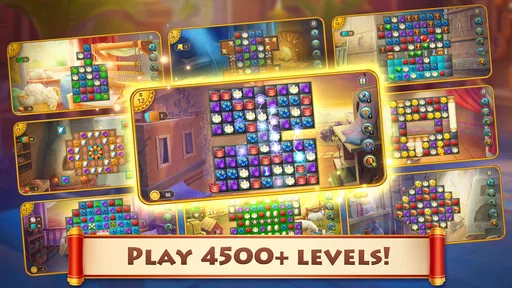
The graphics are pretty impressive, too. I mean, who doesn’t love vibrant visuals that pop? Each level is beautifully designed, and the animations are smooth, making the overall experience quite immersive. It’s like having a little piece of history in your pocket.
Challenging Levels and Exciting Quests
Now, let’s talk about the gameplay. Cradle of Empires: 3 in a Row isn’t just about mindlessly swapping tiles. Each level comes with its own set of challenges, and as you progress, things get more intricate. You’ll need to think strategically to complete objectives and collect resources. And trust me, it gets addictive!
Besides the usual match-three mechanics, the game spices things up with power-ups and boosters. You can create powerful combos that help you clear levels faster and more efficiently. Plus, the quests keep you on your toes. It’s not just about completing levels; you’re rebuilding an empire, after all!
Building and Customizing Your Empire
One of the coolest features is the ability to customize and build your own city. As you gather resources, you can restore ancient structures and bring the city back to life. It’s genuinely satisfying to see your empire grow and evolve with each completed task. You get to be the architect of your own ancient civilization, and that’s pretty epic if you ask me.
Social Features and Events
If you’re someone who enjoys social gaming, you’ll appreciate the interactive features. You can connect with friends, compete in events, and even team up for challenges. The developers frequently roll out new events and updates, keeping the game fresh and exciting. It’s a great way to stay engaged and maybe even make some new gaming buddies.
Choosing how to play
One useful way to approach the game is to treat the city as a slow-burn goal rather than something you need to complete in one sitting. When I have only a few minutes, I can focus on one board and let its reward carry into the larger restoration; on a longer session, I can pay more attention to how quests and resources connect. That flexibility is a strength, although players who dislike layered progression may find the extra objectives distracting rather than motivating.
Compared with a basic match-three game, this one gives me more narrative and collection context between levels. Compared with a more elaborate city-building game, the puzzle board remains the main activity, so I would not choose it if planning layouts or managing a complex settlement is what I want. The trade-off is clear: the restoration gives puzzle wins meaning, but it does not replace the focused depth of a dedicated building game.
For a realistic everyday session, I might open it during a short wait, look at the current board objective, and decide whether I have enough time to finish before starting. If I do, I can focus on the target instead of making random matches; if I do not, it is better to leave the level for later than to rush through moves. This is particularly helpful on objectives that reward a specific kind of collection, where a little attention can matter more than speed.
Small decisions that make a difference
My practical tip is to read the objective before using a booster. A power-up can clear space, but using it without checking the target may leave the important part of the board untouched. I also try to make matches that open up the area I need rather than simply taking the first available combination. These are modest choices, not secret tricks, but they make the game feel more deliberate and can help preserve resources for levels that genuinely call for them.
Another trade-off is the balance between the puzzle and the surrounding progression. If I am in the mood for a quick, self-contained challenge, the quests and rebuilding may feel like extra steps. If I want a reason to revisit a game over time, those same layers help. The best way to judge that balance is to play at the free entry point first and see whether the city’s gradual recovery makes the boards more rewarding for you.
The game is free to start, but optional purchases deserve a careful look, especially for families sharing a device. I would keep purchase decisions separate from a child’s casual play and use the device’s usual purchase controls where appropriate. The age rating is Everyone, but that does not remove the need to decide how in-app spending should be handled. On supported devices, the minimum operating system is Android 5.0, a practical point to check before downloading.
What to expect over time
Social play and events can add variety if you like comparing progress or taking part with friends, but they are not essential to the central match-and-restore loop. I would choose the game for its puzzles and city progression first, then treat those interactive elements as an extra. If you prefer to play entirely on your own, the core appeal still makes sense; if competition is your main reason to install a game, you may want something built more directly around that.
When deciding whether to keep playing, I would pay attention to two things: whether the changing objectives still make boards interesting, and whether the pace of restoration feels satisfying without spending. The version history suggests a product that has been maintained over time, but it cannot tell me what future updates will contain. I would look at what is actually available in the game now and judge it on that, rather than counting on a particular event or feature returning.
Final Thoughts
All in all, Cradle of Empires: 3 in a Row is a delightful blend of puzzle-solving and adventure. It’s perfect for those who love a good story paired with engaging gameplay. Whether you’re a casual gamer or a puzzle aficionado, this game offers something for everyone. So, if you’re ready to embark on a journey through time, give it a download and start rebuilding your empire today!
Happy gaming, and may your empire thrive!
Pros
- Engaging storyline with rich lore.
- Stunning graphics and animations.
- Variety of puzzles to keep gameplay fresh.
- Regular updates with new content.
- Easy to learn for all ages.
Cons
- In-app purchases can be costly.
- Requires constant internet connection.
- Some levels can feel repetitive.
- Limited energy can restrict playtime.
- Ads can be intrusive at times.
FAQs for Cradle of Empires: 3 in a Row
What is the main objective of Cradle of Empires: 3 in a Row?
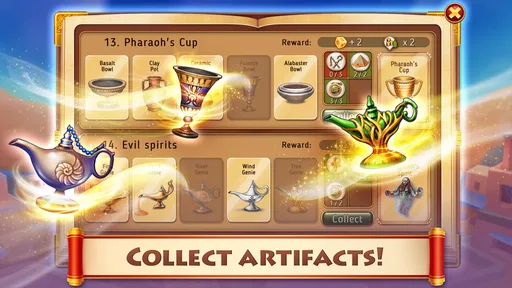
Cradle of Empires: 3 in a Row is a match-3 puzzle game where players are tasked with rebuilding ancient civilizations. By completing puzzles, you earn resources and artifacts to help restore cities and uncover the story behind the empire's downfall. The game combines puzzle-solving with city-building elements, providing a rich narrative experience.
Are there any in-app purchases in Cradle of Empires?
Yes, Cradle of Empires offers in-app purchases. Players can buy additional resources, power-ups, and boosters to enhance their gameplay experience. While the game can be played for free, purchasing these items can help progress through levels more quickly. It's important to manage purchases to avoid unexpected charges.
Do I need an internet connection to play Cradle of Empires?
Cradle of Empires requires an internet connection to access its full features, including updates, events, and social interactions. While some levels might be accessible offline, connecting online ensures that you can compete in events and stay updated with new content. For the best experience, a stable internet connection is recommended.
How does Cradle of Empires integrate story with gameplay?
The game integrates story and gameplay by using puzzle levels to advance the narrative. As you complete match-3 puzzles, you collect resources and artifacts that are used to rebuild cities and uncover pieces of the story. This progression unlocks new characters and plot twists, creating an engaging blend of storytelling and gaming.
Is Cradle of Empires suitable for children?
Cradle of Empires is generally suitable for children, offering simple match-3 puzzles and a family-friendly storyline. However, parents should be aware of in-app purchases and ensure that spending controls are in place. The game's educational elements, such as problem-solving and history, can be beneficial for young players.


